
You're Invited: TRANS-SAFE Closes Its Journey in Cape Town
Updated: Aug 4
Join us in Cape Town as the TRANS-SAFE project marks its final milestone, bringing together transport professionals, policymakers, and researchers to share lessons, showcase results, and chart the path forward for safer mobility across Africa.
📍 Location: Protea Hotel Cape Town Waterfront Breakwater Lodge 📅 Date: 4 August 🏛️ Hosted by: University of Cape Town
About the Event
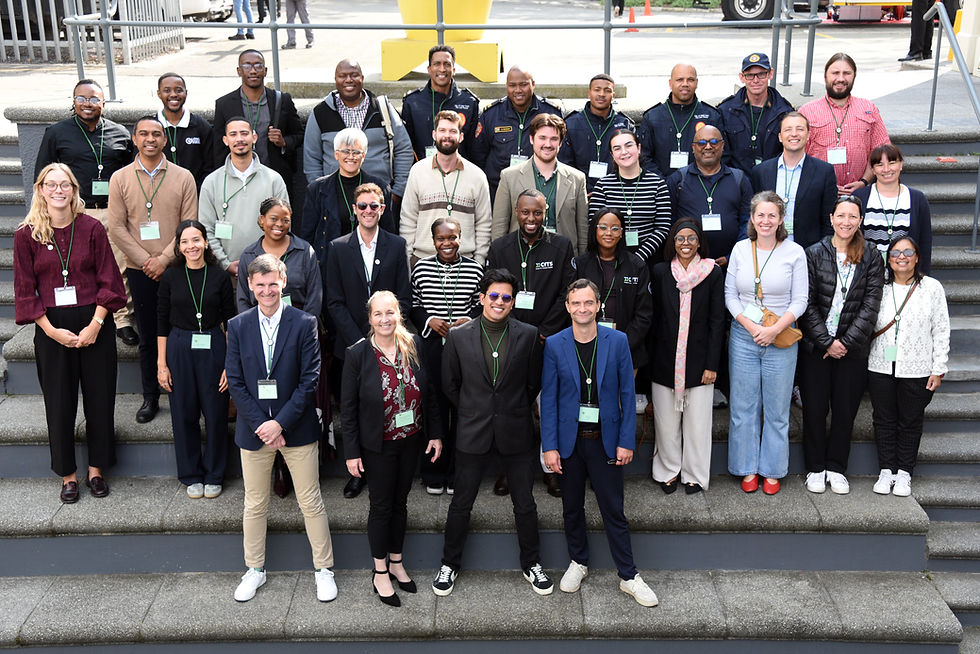
The TRANS-SAFE Project Final Event will take place on 4 August in Cape Town, hosted by the University of Cape Town, bringing together transport professionals, policymakers and researchers to reflect on the project's achievements and future impact. The event will showcase insights and lessons learned from the TRANS-SAFE project, while creating a platform for dialogue and knowledge exchange among stakeholders committed to improving transport safety. Discussions will explore the application of the Safe System Approach, practical approaches for monitoring and evaluation, road safety through a gender-responsive lens, and critical safety considerations for public transport infrastructure, including Bus Rapid Transit (BRT) systems. By fostering collaboration across sectors, the event aims to contribute to the development of safer, more inclusive, and sustainable mobility systems for all.
AGENDA
09:00-09:15 | Welcome coffee |
09:15-09:30 | Welcome Words Marianne Vanderschuren (UCT) and Oliver Lah (UEMI) |
09:30-11:00 | Session 1 : TRANS-SAFE living labs round table Panel discussion and demonstration project presentations Speakers: Chilekwa O’Brien (Lusaka), Owen Mwaura (Cape Town), Classio Mendiate (Kigali), Isaac Boateng (Kumasi) Moderator: Monica Castañeda (EIT Urban Mobility) |
11:00-11:15 | Coffee break |
11:15-13:00 | Session 2: Safety elements for BRT A joint session with the Ebrt2030 project, focusing on the safe systems approach for deploying bus priority/BRT systems and innovations in cities. 11:15 -11:20 Introduction, Flavio Grazian, UITP 11:20 -11:30 Case Study 1: Designing safety into a new BRT system, Eng. Nathanael Challa, Addis Ababa Road and Transport Bureau 11:30 -11:40 Case Study 2: Improving operational safety through innovation, Stefano Sirri, Start Romagna (Italy) – Online 11:40 -11:50 Case Study 3: Integrated and safe mobility from a mature BRT system, Harold Peters, (City of Cape Town) 11:50-12:00 Expert Reflections - Ondrej Vaculin (THI) and Tomasz Bonkowski (University of West Bohemia) 12:00-12:10 Post-crash care and rescue, Marianne Vanderschuren (UCT) and Ondrej Vaculin (THI) 12:10 -13:00 World Café Discussion |
13:00-14:00 | Lunch |
14:00-15:00 | Session 3: Gender perspective lens on road safety The session is looking at designing inclusive solutions, discussions to focus on how gender influences travel patterns, exposure to safety risks, perceptions of safety, and how transport policies, infrastructure, and services can better address needs. Speakers: Nkhensani Biko (UCT), Devon Tighe (Value for Women) Heba Mousa (ICLEI - Local governments for sustainability) Moderator: Daniel Munene (UN-HABITAT) |
15:00-15:15 | Coffee Break |
15:15-16:15 | Session 4: Legacy and Future Mobility Challenges A reflection session looking at advocating for road safety and a safe systems approach, contextual recommendations from TRANS-SAFE and other relevant projects, and discussion on funding, governance models, and long-term vision. Speakers: Oliver Lah (TUB), Gabriela Straková (UWB), Mikhail Manuel (City of Cape Town), Galeboe Galeboe Motlhajoe (SORSA), Luke van Wyk (YOURS) Moderator: Roland Postma (Young Urbanists) |
16:15-16:30 | Closing remarks |
Road traffic injuries remain one of the most serious and preventable public health challenges facing African cities today. TRANS-SAFE was built on the belief that safer streets require more than infrastructure alone: they require data, community ownership, gender-responsive design, and sustained political commitment. This final event is a chance to take stock of what the project has demonstrated, and to ensure those lessons travel well beyond Cape Town.


Comments